Are you aware that a burst air compression setup can discharge force comparable to a stick of dynamite? Numerous facilities continue to utilize plumbing setups constructed of dangerous materials, oblivious to the dangers. This article explains why security must be the priority.
Buy PVC Air Lines
Despite growing interest in particular materials, OSHA strictly forbids utilizing them in exposed settings. With time, exposure to oils and climate shifts compromises them, resulting in disastrous ruptures. Even at “safe” pressure ratings, the risk of explosions stays significant.
For reliable alternatives, Installation Parts Supply provides durable solutions like aluminum. Investing in proper materials prevents costly fines and maintains factories secure. We will examine how to construct a more secure setup.
Key Takeaways
- OSHA bans specific plastics because of explosion risks.
- Pressure ratings fall as heat levels change.
- Fragility intensifies with age, raising failure risks.
- Aluminum tubing provides a more secure alternative.
- Correct installation stops costly fines and accidents.
Why You Should Avoid PVC For Air Compressor Lines
Producers clearly caution against utilizing certain plastics for high-energy uses. Different from liquid systems, compressed air holds explosive energy—a ruptured line can unleash impact similar to dynamite. This renders material
selection crucial for protection.
- Brittleness: Sub-freezing temps turn materials brittle, increasing fracture risks.
- Adhesive failures: Fittings lose strength when subjected to compressor oils or temperature swings.
- Misleading ratings: PSI tolerance drops by half at high temperatures—most workshops exceed this.
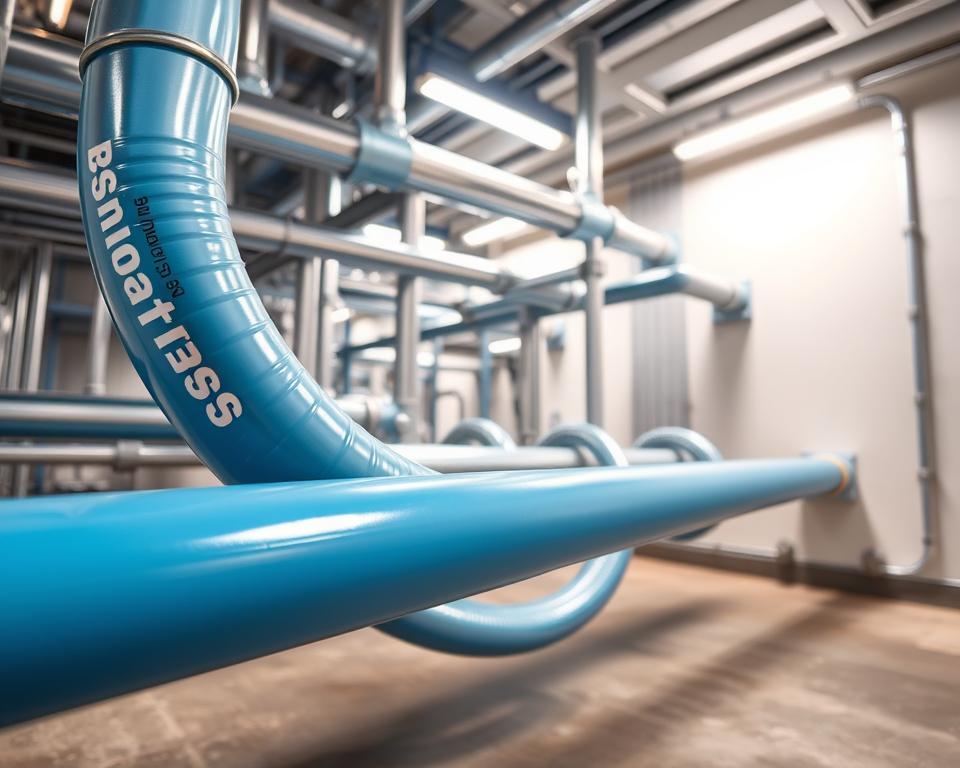
OSHA references a hefty penalty after a plant’s piping shattered, harming employees. The “compression heat” further lowers safe operating limits, a factor often overlooked in specs.
“Above-ground use of certain polymers for pressurized air breaches OSHA standards due to burst dangers.”
Metallic options break more predictably, warping rather than fragmenting. In contrast, plastic shrapnel from bursts can fly over 50 feet, lodging in walls or machinery.
Workshops face daily temperature fluctuations that speed up material degradation. In a decade, sunlight damage and chemical reactions moreover compromise integrity, transforming minor leaks into major hazards.
Safe Alternatives To PVC Pipe For Air Compressor Lines
Aluminum piping systems surpass conventional options in both safety and efficiency. With significantly less leakage than iron pipe, they are a top choice for contemporary buildings. Their light construction and rust protection make them perfect for extended service.
Modular aluminum systems save time—no threading needed. Installation Parts Supply offers ready-made parts that snap together. A Midwest car factory cut work expenses by forty percent after switching to this solution.
- Copper: Ideal for sterile areas due to anti-bacterial traits. Requires soldering expertise.
- Steel Tubing: Withstands rust in damp locations like coastal workshops.
- Plastic Composites: Chemical-resistant for labs and plants handling chemicals.
“Our aluminum retrofit cut power loss by 15%—paying for itself in 18 months.”
Tightness is key. Over-tightened joints crack, whereas loose ones leak. Adhere to manufacturer specs—usually 25–30 ft-lbs for aluminum connections.
In food processing settings, NSF-certified choices ensure air purity. Constantly align pipes to your environment’s demands.
Guide To Selecting Air Piping Materials
Selecting the right material for your system demands balancing cost, safety, and efficiency. A Midwest factory preserved $12,000 annually by moving to leak-resistant alloy. This is how to make the correct decision.
| Type | Cost (per ft) | Maintenance | Payback Period |
|---|---|---|---|
| Aluminium | $8.50 | Minimal | 18 months |
| Black Pipe | $5.00 | High | None |
| Copper | $10.20 | Moderate | 24 months |
Temperature matters. Aluminium handles -40°F to 200°F, while plastics crack in the cold. In areas with chemicals, steel resists solvents.
Expert Tip: Calculate return on investment via air loss math. A ten percent leak in a 50 HP system wastes $3,500 per year.
- Match PSI ratings to your compressor’s output.
- Check safety standards for weld inspections and pressure tests.
- Request a free system audit from the supplier.
“The system upgrade reduced energy waste by fifteen percent—paying for itself in 1.5 years.”
DIY installations are okay for small shops, but experts guarantee leak-free joints. Make sure to verify warranty terms—certain brands cover over a decade.
Final Thoughts
Choosing the correct components for your compressed air system isn’t just about cost—it’s about protection. Research indicates most breakdowns occur in aged setups, often with dangerous results. Aluminum offers 99.8% reliability, making it a wise lasting investment.
Key takeaways:
- Steer clear of brittle materials that shatter under stress.
- Opt for rust-proof alloys like aluminium or stainless steel.
- Non-compliant systems risk citations and coverage problems.
Ready to upgrade? Installation Parts Supply offers same-day quotes and limited-time discounts on introductory packages. Download our complimentary maintenance template or contact us for emergency replacements.
Commit to safer piping today—your workers’ well-being depends on it.
Related: Upgrading Your Air Compressor to an L6 20 Plug System